
Complete Dfiles.com premium link generator guide
This practical guide explains the complete Dfiles.com workflow in MultiDebrid, from selecting the correct source address to reviewing the generated result and opening the final download session. It is intended for files you own or are authorized to access. The real interface images above let you compare every stage with what appears in your own account. The quickest way to diagnose a Dfiles.com rejection is to inspect the host-specific route before changing account or browser settings.
How to prepare a valid Dfiles.com link
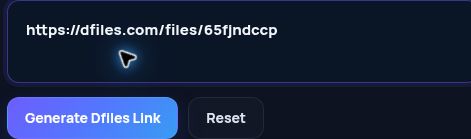
Copy the complete dfiles.com file URL exactly as supplied. Keep its domain, file identifier and any required path or filename segment intact. The accepted structure is shown below; paste only the URL into the Dfiles generator.
The reviewed Dfiles.com route fingerprint is dfiles.com / files / file-id. Its decisive component is /files/. Keep that component in the same position, together with the original identifier and any suffix that belongs to the source address. Start on the individual file page hosted by dfiles.com. The generator expects the complete address, including its file identifier and every required path or filename segment. A homepage, account page, search result, shortened address or copied HTML is not a file URL. The usual structure for this host is dfiles.com / files / file-id; keep that structure intact when copying.
dfiles.com / files / file-id How to read the generated result
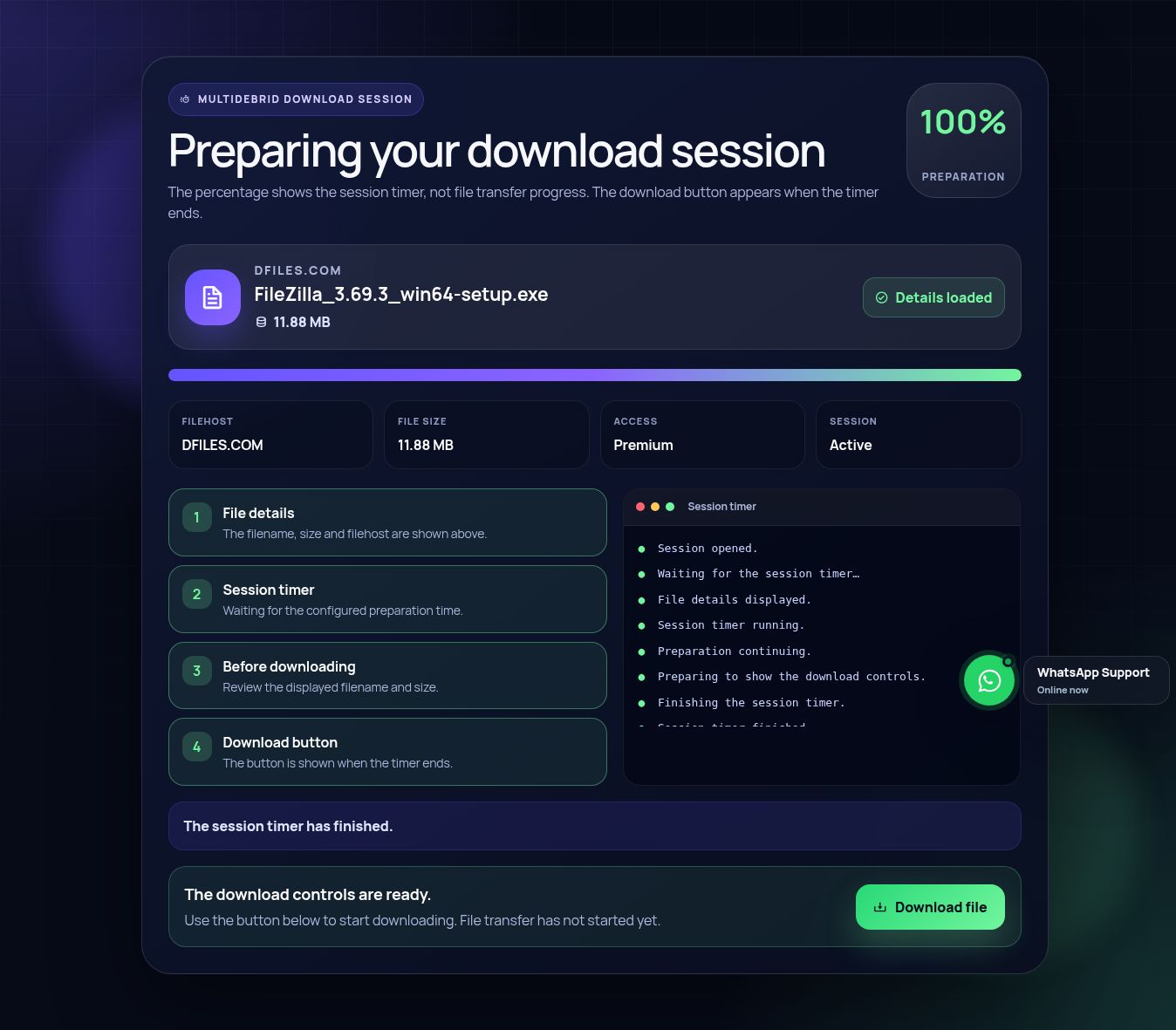
The visual walkthrough above shows the real Dfiles flow: paste the source URL, generate the result, open Download Now and wait for the MultiDebrid session controls. Generated session addresses are private and should not be shared.
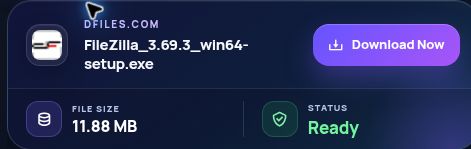
A successful result card identifies the detected filehost, reports the filename and size returned by the service, and shows the next available action. Ready means the link can proceed to a session; it does not certify the contents, publisher or safety of the file. If the action requests an upgrade or reports unavailable access, review the account status and source link instead of treating it as a completed download.
Step-by-step Dfiles.com download workflow
- Open the direct Dfiles.com file page on dfiles.com and compare its address with dfiles.com / files / file-id. Navigation, search, profile and account pages do not represent this route.
- Copy the complete address without rewriting /files/. Paste one Dfiles.com URL per line and retain the identifier, filename, suffix and query portion whenever they appear in the reviewed pattern.
- Select the generate button and wait for MultiDebrid to validate the host, file identifier and your current account access. Do not repeatedly submit the same link while the status is still being prepared.
- Read the result card before continuing. Compare the displayed host, filename and size with the source you intended to process, then use Download Now only when the result is correct.
- On the download-session page, wait for the preparation timer to finish and use the final download control. The percentage represents session preparation, not transferred bytes or proof that a file has already been saved.
Troubleshooting a Dfiles.com link
When a Dfiles.com link is rejected, inspect /files/ first and then compare the remaining separators with dfiles.com / files / file-id. A missing slash, question mark, suffix or identifier changes what the generator receives. If the result does not appear, first compare the address with dfiles.com / files / file-id. Restore any missing file identifier, filename suffix or required query parameter and make sure the domain is one of dfiles.com. Then confirm that you are signed in, that your Premium access or assigned quota is available, and that the source file has not been removed. For an expired session, return to the original file page and create a fresh session rather than sharing or reusing a private gateway address.
Safe, private and reliable use
Use Dfiles.com links only for material you are legally permitted to retrieve. Generated gateway addresses are tied to your session and should not be posted publicly. Before opening any downloaded file, verify its name and extension, scan unexpected archives or executables with appropriate security tools, and keep enough local storage for both the download and any later extraction. A filename or file size alone cannot prove authenticity.
Frequently asked questions about Dfiles.com
How do I download a Dfiles link with MultiDebrid?
Paste the complete dfiles.com file-page URL into the Dfiles generator and select the generate button. When the result is ready, open Download Now, wait for the session timer and use the download control with your own authorized account access.
Which exact Dfiles.com URL pattern does this guide cover?
It covers dfiles.com / files / file-id. This is the reviewed direct-link shape for the page; a homepage or account URL is a different kind of address.
Can I remove /files/ from this Dfiles.com link?
No. In this pattern, /files/ helps preserve the route or file reference. Keep it exactly where it appears and copy the complete source URL.
What should the Dfiles.com result card confirm?
It should identify the expected filehost and show the filename, size and available action returned for that link. Continue only when those details match the intended source.
Do I need Premium?
Free download quota is not currently assigned by default. Sign in to see any access already available on your account. Premium packages are available for continued personal usage.
How can I get help with Dfiles.com?
Contact support with the host name, the approximate time and the error you see. You do not need to share your password or payment details. Contact Support
 Daofile.com
 Extmatrix.com
 File.al
 Filefox.cc
 Filejoker.net
 Filer.net